
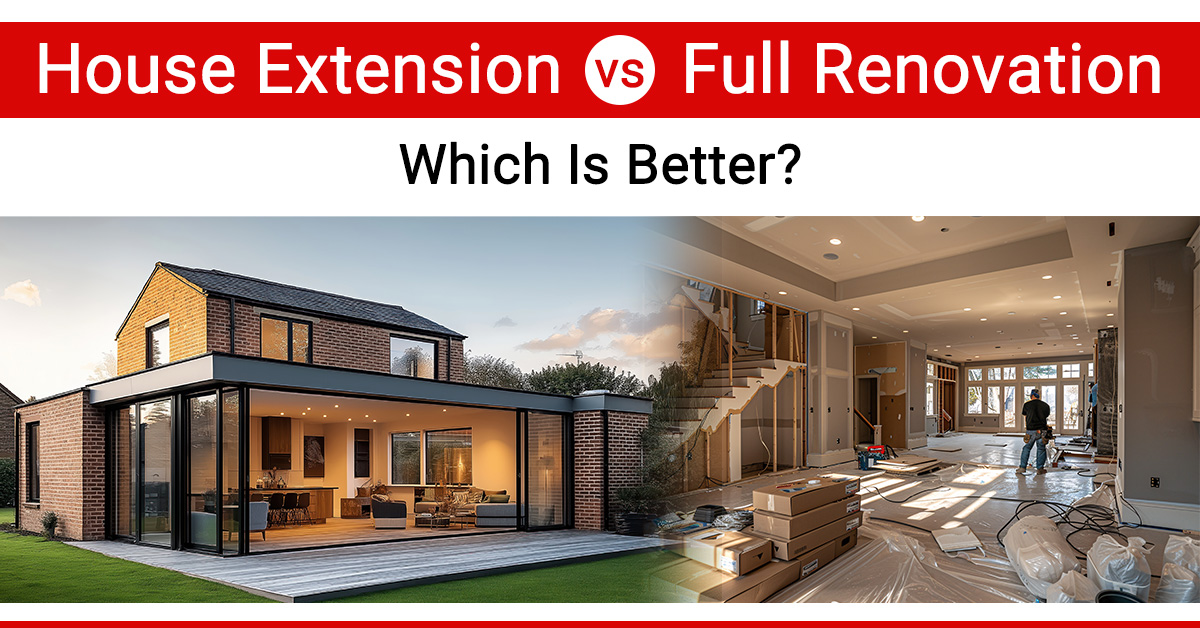
Every homeowner reaches this point eventually, where the house feels too small, too dated, or just not quite right anymore, and the question becomes whether to build outward or rebuild what’s already there. It’s not a small decision either way, and it’s one of the most common questions we hear from families looking into home renovation in Chennai. One route adds square footage, the other reshapes what you already own, and picking between them depends on your budget, your timeline, and honestly, what’s actually wrong with the house in the first place.
What a House Extension Actually Solves
An extension makes sense when the core problem is space, not condition. Maybe the kitchen is cramped, the family has grown, or you need a home office that doesn’t double as the dining table. Adding a room, extending the layout, or building upward gives you more usable area without touching what already works in the rest of the house.
A few things make extensions the right call:
- Your existing structure is sound. If the walls, roof, and foundation are in good shape, there’s no reason to redo them.
- You need more room, not a different layout. Extensions add space; they don’t necessarily fix a poor floor plan.
- You want to avoid moving out during construction. Extensions can often be built with the family still living in the house, at least for part of the process.
- Your budget is tighter than a full renovation would demand. Adding on is generally less expensive than gutting and rebuilding an entire property.
That said, extensions have limits. If your plumbing is decades old or the wiring can’t handle modern appliances, adding a new room doesn’t solve those underlying issues. It just adds more square footage on top of problems that are still there.
When a Full Renovation Makes More Sense
A full renovation is the better path when the problem is the house itself, not just the space in it. A leaking roof, wiring that hasn’t been touched since the eighties, cracks running along a wall, a layout nobody actually likes living in, these are the signs pointing toward a deeper overhaul rather than an addition.
That’s usually when people start looking into home renovation in Chennai as the real answer, because a job like this rarely stays contained to one trade. Electricians, plumbers, civil crews, and finishing teams end up working the same project at once, not bolting a new room onto the side of the house and calling it done.
A full renovation is worth considering when:
- There are structural issues that have to be sorted out before you can build anything on top of them.
- The current layout just doesn’t work for the family anymore, no matter how much extra space you bolt on.
- Plumbing, electrical, or waterproofing systems are outdated and due for replacement anyway.
- You want a cohesive design across the whole property rather than a new section that looks and feels different from the rest.
Kitchens are a common starting point for this kind of project. Kitchen renovation in Chennai projects often reveal deeper issues once cabinets and old fittings come out, things like water damage behind counters or wiring that was never brought up to current standards. Once you’re already opening up the walls, it usually makes sense to fix everything at once rather than patch it and revisit the same problem in a few years.
The Waterproofing Question Nobody Thinks About Until It’s a Problem
Here’s something that gets overlooked in both extension and renovation decisions: water damage. Chennai’s climate is hard on buildings, and if your existing structure has any history of seepage or dampness, that issue needs to be dealt with before you build anything new on top of it, whether that’s an extension or a renovated room.
Terrace waterproofing in Chennai is one of the most commonly skipped steps in a renovation budget, mostly because it isn’t visible day to day the way a new kitchen or an extra bedroom is. But a terrace that leaks will eventually damage the ceiling below it, and no amount of interior renovation fixes that if the source of the problem is still sitting on the roof.
If you’re extending your house upward, terrace waterproofing in Chennai becomes even more important, since you’re literally building on the surface that’s supposed to be keeping water out. Skipping this step to save money upfront tends to cost significantly more once seepage starts showing up in ceilings and walls a year or two down the line.
This is exactly why working with experienced water proofing contractors in Chennai matters, regardless of which route you choose. A proper inspection before construction begins can catch existing damage that would otherwise get sealed inside a new wall or built over during an extension. Good water proofing contractors in Chennai will flag these issues early rather than after the work is done.
Comparing the Two Directly
It helps to lay the decision out plainly rather than getting lost in general advice. Here’s how the two options typically stack up against each other.
Cost tends to favor extensions. You’re building onto something that already exists rather than tearing it out, so the bill is usually smaller upfront. A full renovation costs more to begin with, but it often heads off bigger repair bills a few years down the road.
Timeline works out differently too. An extension can often go up while the family keeps living in the house. A full renovation, especially one that touches electrical and plumbing throughout, usually means finding somewhere else to stay for a while.
Disruption follows a similar pattern. Extensions stay fairly contained to one part of the property, while a full renovation can turn the whole household upside down depending on scope.
Long-term value tends to swing the other way. A renovation that fixes structural and systems problems generally adds more resale value than an extension that just adds square footage onto a dated house. Kitchens are a good example, which is part of why kitchen renovation in Chennai projects tend to pay for themselves at resale.
Then there’s the risk of what you find once you start. Renovations open up walls, and walls have a habit of hiding things nobody budgeted for. Extensions carry less of this risk since you’re building new rather than digging into old work.
Making the Right Call for Your House
There’s no universal answer here, and honestly, a lot of homeowners end up doing some version of both over time. Start by getting an honest assessment of your existing structure. If sound and space are genuinely the only issues, an extension is the more efficient path. If the house has aging systems, water damage, or a layout that doesn’t work no matter how much space you add, a full renovation addresses the actual problem rather than working around it.
Whichever direction you choose, make sure waterproofing is part of the plan from the start. Whether you’re adding a room or rebuilding a kitchen, moisture protection needs to be part of the plan from day one, not something you deal with after the first monsoon exposes a leak you didn’t know was there. This is precisely the gap that dedicated terrace waterproofing services in Chennai close before construction even starts.
Final Thoughts
Choosing between an extension and a full renovation comes down to being honest about what your house actually needs. Space problems call for building out. Structural and systems problems call for rebuilding what’s already there. For homeowners weighing these options, working with a team experienced in both directions, from full scale home renovation in Chennai to focused work like kitchen renovation in Chennai, makes it easier to get an honest read on which path actually solves your problem instead of just moving it somewhere else in the house. And regardless of which path you take, bringing in water proofing contractors in Chennai early in the planning stage is one decision you’re unlikely to regret.